Viadrina Summer University 2012 - The Culture of Football: Passion, Power, Politics

Football is not only the most popular sport in many regions of the world but also a social, political and cultural mass phenomenon. In light of the European Football Championship 2012 (in Poland and the Ukraine), the long-standing Viadrina Summer University dedicates an intensive program to the cultural and social scientific exploration of this phenomenon. To what extent does football mirror social and cultural developments of modern societies? Which interdependencies exist between football and politics? Which identities – competing or converging ones – are represented by football? And which roles do language, media, rituals play in all this? These questions shall be pursued in a German-Polish project at Viadrina University and its Polish partner institution, Adam Mickiewicz University in Poznań. The main coursework of Viadrina Summer University will be carried by Viadrina faculty representing sociological and political science as well as historical, economic and linguistic approaches. In addition, lectures and seminars will be offered by academics of other German and European as well as American universities.

Core Course I: „Football and the Politics of Identity“ / Prof. Dr. Michael Minkenberg
Core Course II: „The Political Economy of Football“ / Prof. Dr. Timm Beichelt


Who can participate?
Viadrina Summer University welcomes advanced students and young researchers from the social sciences, modern European history, linguistics and communication studies, as well as economics. Applications from candidates who already hold a first degree and/or have specialized in issues related to the program will receive preferential treatment. Full-time attendance of the Summer University is obligatory for all participants. Students are expected to contribute actively to the Summer University by making short presentations and submitting research essays. Proficiency in English is required as all parts of the program will be taught in English.

Teaching and Syllabus
The Summer University combines lectures, seminar discussions, excursions and student presentations. For our international participants there is a German language course offered every day for one hour and all levels. Details on the course program, reading requirements and syllabus are available in advance on the Summer University’s website.

Certificate
The Viadrina Summer University Certificate requires active participation in one core course, two seminars, one workshop, three lectures and one excursion. Participants who wish to transfer their credit points to their home universities are expected to deliver a research paper and to make an in-class oral presentation. Students are entitled to earn up to 18 ECTS points. This requires participation of 45 lecture-/seminar-hours and a research paper.

Course fees and fellowships
The registration fee of 250 Euros includes tuition, course materials and other costs related to the course program. The Summer University offers 25 fellowships provided by the German Academic Exchange Service (DAAD) and the German Foreign Office for foreign participants. Fellowships cover tuition, accommodation, travelling costs and a lump sum of 200 Euro towards meals and living costs. Travelling costs will be reimbursed according to the regulations of the DAAD.

The Summer University is open to a limited number of regular Viadrina students (see university calendar summer term, faculty for social and cultural sciences M.A.-part). The fee is also 250 Euro for EUV-students.

Accommodation
Participants are invited to stay in modern student apartments with single rooms and modern facilities in Słubice, Poland. The price of a single room per person for 19 nights will be around 120 Euro. Grocery stores, supermarkets and restaurants are all to be found within walking distance.

Application
Deadline for applications of international participants and DAAD-scholarships is 31st January 2012. Decisions of acceptance will be announced by 28th February 2012 by e-mail.
Deadline for applications of EUV-MA-students: 15th March 2012 (MA-KVV). Decisions of acceptance will be announced by 30th March 2012 by e-mail.

Please send us:
1. Application form ( word 97-2003, pdf )
2. Curriculum Vitae
3. Letter of Motivation (one page)
4. 1 Letter of Recommendation (university professor and/or supervisor)
5. Proof of English language proficiency (Level C1 of The Common European Framework of Reference for Languages).

Applications by ordinary mail only. All applications have to be done in English.

If you have any questions, please contact Mrs Kathrin Goeritz: vsu@europa-uni.de

Website: http://www.kuwi.europa-uni.de/de/studium/summeruniversity/index.html

EVS Volunteering in Belgium 2012-2013

The European AIDS Treatment Group (EATG) is looking for a volunteer to support us with our communication work towards people living with HIV/AIDS and other stakeholders. The volunteers would be involved in projects to raise awareness about HIV in Europe, mainly among young communities.

EATG is a large network of activists; we regularly receive suggestions from our members for new projects and initiatives. Our members are activists that advocate for best access to HIV prevention, treatment and care across Europe. We develop projects for universal access to HIV medicines and prevention.

Volunteers would help us in our daily tasks; and collaborate and learn with our network of members and partners.

Our target group is people living with HIV and their supporters. The volunteers would work in a young and friendly environment in our office in Brussels and would be in contact with the HIV community in Europe on a daily basis (through contact with our members and partners in different European countries). Furthermore, the volunteer would be in contact with the public health community in Brussels and the main policy makers.

The volunteers would participate in actions in different European countries targeted at the most at risk groups for HIV transmission. E.g. projects aiming to decrease stigma and discrimination; developing strategies for testing of young people and early diagnosis of HIV; raising awareness and developing knowledge of young people on HIV related issues, as well as sexual health and other sexual transmitted diseases; disseminating information about European actitivites for HIV prevention.

EATG works with the most vulnerable populations to HIV transmission (migrants, drug users, sex workers, men having sex with men). We are often confronted by issues of stigma and discrimination and inequalities in different health systems across Europe, and our work aims to tackle these inequalities.

The scope of our work in the European region, however, our activities focus in Eastern Europe, where the HIV prevalence is higher then in other European countries.We consider the project environment challenging, as the volunteer would work with us mainly on HIV prevention among most vulnerable groups in Europe and namely in Eastern Europe.  

Tasks 
- Organisation of events, including trainings: logistic support, communication with participants and follow up. (e.g. attending workshops on HIV treatment and prevention in different countries; participating in AIDS conferences and supporting us with our exhbition/booths in conferences; organising actions and demonstrations related to HIV prevention and treatment) 
- Contributing to small projects on HIV prevention, treatment and care. (e.g. AIDS&Mobility, project that aims to develop mediator training among young migrant communities in Europe; COPE Continuous Patient Education, a mechanism to fund local organisation to translate and adapt publications about HIV and sexual transmitted diseases into different languages)
- Support implementation of EATG communication strategy (e.g. development of members relations, drafting articles and editing the newsletter, updating website, organisation of our library and databases, updating Facebook and Twitter page with main HIV news). 
- Other: drafting documents and performing small translations; support dissemination of information and media relations; representing the organisation in events. 
- Development of a project for the youth HIV community in Europe with impact at national scale.
Criteria
- good communication skills 
- interest in HIV/AIDS issues, or discrimination and social exclusion 
- motivation to share knowledge at national level and raise awareness on HIV prevention

Procedure
The EATG would like to cooperate with organisations working on anti-discrimination, equal opportunities, health and youth information. We are looking for volunteers with a strong interest on HIV/AIDS issues, or with a strong interest in learning more about HIV. Young people living with HIV and/or volunteers from different backgrounds and part of migrant or other communities vulnerable to HIV transmission are encouraged to apply, however, the most important would be to host someone willing to work with HIV positive people and learn about HIV treatment, independently of his/her background. The selection is based on the motivation to develop projects on HIV/AIDS prevention, treatment and care and to further disseminate information to his/her youth community back home. 
All our documents are written in English but our staff speak French and we would communicate in French and/or English. 
Project start date: 01/05/2012, project end date: 01/05/2013. 
Applications (CV and motivation letter) should be sent to analucia.cardoso@eatg.org until 23rd January, 2012.

Oslo International Summer School 2012

The International Summer School (ISS) at the University of Oslo, Norway, yearly offers intensive Master's and Bachelor's courses over six weeks in summer. We will welcome more than 550 students from nearly 100 countries from 23 June to 3 August 2012. The deadline for this year scholarship applications is 1 February, 2012. Self-paying applicants can apply after this date.

The ISS is a learning community of diverse students who come together to study, interact and increase understanding and good will between nations. It aims at developing and conveying knowledge and at promoting understanding between people from different cultures. This dual purpose is reflected in the ISS motto: “Six Weeks of Academic Achievement and International Good Will”.
 
Admission requirements for ISS
The requirements listed below must be met prior to the start of the ISS.

Bachelor's courses

Master's courses

Norwegian Language Courses

Scholarship applicants

Many applicants will find that they are academically qualified to attend ISS, but they will not meet the requirements set by the scholarship donors. Many scholarship applicants are academically qualified to attend the ISS, but they do not meet the requirements for a scholarship. As a result, the application will be rejected. 
To be a successful scholarship candidate you will need to demonstrate:
  • that your academic background is related to the course you wish to take;
  • that your professional background/goals are related to the course you wish to take;
  • financial need;
  • personal qualities that make you a good representative of your country.
Competition for scholarships is high. Many scholarship applicants are rejected in the Pre-Application phase. At this point, the applicant can switch the status to "self-paying" or "sponsored" and try to find the funding from a source outside the ISS.


Required supporting documents 

Many applications are delayed or rejected because candidates fail to send certified copies of their academic credentials. A certified copy means you must take your documents to a public official or notary. The official must make the copies, stamp the papers and sign them, attesting to their validity. Certified copies can be made at a university registrar, police office, public notary, bank or post office.  We do NOT accept a photocopy or a scan of a document that has a stamp or seal.

Include the following:

1. Application form

The application form is available only through the Pre-Application form. Filling out the Pre-Application form is the first step in the application process.
The ISS will send the application form by email as a pdf file. Download and print the application form. Some fields are already filled in with information from your Pre-Application form. Be sure to complete the rest of the fields by hand. Please review the information and make any corrections directly on the application in pen. Remember to sign and date the form!

2. Two passport-sized photos

Write your name on the reverse side of the photographs. The photographs should be of good quality.

3. ISS scholarship form (only for scholarship applicants)

Scholarship application forms are available only through the Pre-Application form. Print out the form and follow the instructions given. Remember that your reference person cannot be related to you and s/he must also stamp and sign the form.

4. Statement of purpose

Your statement of purpose should be one page, typed, double spaced (max. 500 words). Tell us why the course is important to you, how it helps you fulfill future goals or how it relates to your current studies or employment. Briefly state your personal qualities that make you a good representative of your country.
Applicants for Norwegian levels III and IV should write their statement in Norwegian. The statement of purpose is a particularly important basis for selecting applicants for scholarships.

5. Letters of recommendation

You should submit two letters of recommendation from two different people who are not related to you by blood or marriage. The referee should give information regarding your character, intellectual ability, and seriousness of purpose. The letter should be written on official letterhead and must include contact information for the reference person. At least one letter should come from your professor, lecturer, headmaster, or if employed, from your current employer.
We rely heavily on the letters of recommendation when considering candidates for Master's courses and for scholarships.
Exceptions: If you live in Norway and are applying for Norwegian language courses, you do not need to submit the letters of recommendation. 

6. English documentation

All applicants must submit certified copies (stamped and signed by a public official) of their test scores or exams. If you submit a statement from a professor or employer, we prefer the statement to be written on official letterhead. Native English speakers from the USA, Canada, UK, Ireland, Australia or New Zealand do not need to document their English skills. . 

7. Norwegian documentation

Applicants to Norwegian language levels II, III or IV must submit certified copies (stamped and signed by a public official) of transcripts or test scores of previous Norwegian courses or exams (i.e. Bergenstest). Recommendations from a teacher or employer must be written on official letterhead.

8. Certified copies of transcripts/diplomas

You must submit a certified copy of your academic credentials (transcripts, diplomas, etc.) or have official credentials sent directly from the bursars of the issuing school/university.
If your documents are not in English, French, German, Italian, Spanish, Norwegian, Swedish or Danish, they must be translated into one of these languages – preferably Norwegian or English – by an official translator who must sign and stamp the original and the translation. You must submit BOTH the certified transcripts and the translations.

9. CV or resume (Master-level applicants and scholarship applicants)

We require a CV/resume from all candidates applying for Master-level courses and from all scholarship applicants. Otherwise, this is optional.

10. Copy of passport

Applicants must submit the pages of their passport showing personal data and photo. Applicants residing in EU countries may submit a copy of their National Identity Card instead of a passport.
If you reside in Norway, you must submit both a copy of a valid residence permit (oppholdstillatelse) and a copy of the pages of your passport showing personal data and photo.

11. Receipt for payment of the application fee

No application is complete until the application fee is paid in full. Some scholarship applicants are exempted from the application fee.

Where to send your completed application

Please note the ISS requires the complete and physical application form and supporting documents.
  • Do NOT scan your application and send it as an attachment by email.
  • Do NOT fax your application to us. 
Send your application form and supporting documents to:
International Summer School
University of Oslo
PO Box 1082, Blindern
NO-0317 OSLO
NORWAY
Our physical address for Courier Mail (DHL, FedEx, etc.) is:
International Summer School
University of Oslo
Moltke Moes vei 30-32
Georg Morgenstiernes hus, 2. etg.
NO-0851 OSLO
NORWAY

If you reside in USA or Canada, send your application to:
Oslo International Summer School
c/o St. Olaf College
1520 St. Olaf Avenue
Northfield, MN 55057-1098
USA

How to apply: read here 


Winter University Course on Negotiation, Professional Relationship, and Protocols

Winter University Course on Negotiation, Professional Relationship, and Protocols will be held on February 16-22, 2012 in Kosovo. This course will develop your understanding of the principles, strategies, and tactics of effective negotiation and professional relationship management. You will also increase awareness and understanding of ethical principles and stakeholder considerations that influence the choices offered and made in transactions and relationships. You will learn to identify and assess the variables in negotiations, develop sound negotiation planning techniques, develop an understanding of various strategies and tactics to use as you ethically resolve conflicts, transactional and interpersonal differences. Learn how to use that knowledge to execute effective dispute resolutions, and improved competence to manage professional relationships. The course methodology is highly participative and utilizes class discussion, assigned readings, and simulations in one-on-one, fishbowl, and group situations.


Course Overview

This course is designed to help you better understand the theory, processes, and practices of negotiation, conflict resolution and relationship management so that you can be a more effective negotiator in a wide variety of situations. If you take advantage of the opportunities this course offers, you will be comfortable and more productive managing negotiations as well as professional and personal relationships. You will develop an understanding of the principles, strategies, and tactics of effective negotiation, conflict resolution, and relationship management, and enhance your ability to assess the variables in negotiations, the impact of interpersonal styles, personality, and culture. The course treats negotiation, conflict resolution and relationship management as complex processes that require the successful practitioner to develop and use a unique blend of perceptual, persuasive, analytical, and interpersonal skills. After each exercise, we will discuss what happened and why it happened so that you will develop understanding as well as factual knowledge.

Participation fee for:
• Kosovo and Western Balkan students is 100 Euro; (former KYATA’s students 90 Euro)
• YATA and ATA members is 100 euro ( all inclusive) and for non-ATA and YATA members 140 Euro

Application deadline: 28 January 2012

Application form may be obtained via web page www.yata-kosova.org or you can request it at application@yata-kosova.org

Ljubljana Summer School - Take the Best from East & West 2012

Applications are now open for the 2012 edition of the international summer school Take the Best from East & West held at the Economic Faculty of the University of Ljubljana, Slovenia. The summer school will take place on 9-27 July 2012.

The Ljubljana Summer School is a three-week programme. It is open to undergraduates, graduate students and recent graduates. Over three exciting and challenging weeks, students attend courses, interact with managers during company visits, discover the local culture and socialise with people from all around the world.  Students will be able to choose from among many courses which are academically challenging and intellectually stimulating. Discussions between professors and students through various interactive teaching methods are strongly encouraged. Coming from Slovenia and all over the world, the lecturers are experts in their chosen fields and actively involved in academic research; many act as advisers and consultants to companies and the government.


Courses and ECTS Credits
 
We offer many courses which are academically challenging and intellectually stimulating. Discussion between professors and students through various interactive teaching methods are strongly encouraged. Lecturers, from Slovenia and all over the world, are experts in their chosen fields and are actively involved in academic research; many act as advisers and consultants to companies and the government. 

In line with your home university policy, you can earn ECTS credits if you fulfil all course requirements. Together with ECTS credits you receive a Certificate of Attendance. You may choose one or two courses. The courses will be lectured in the morning or in the afternoon. Number of students per course is limited. Please note that a course will not be offered if fewer than 15 students apply. 

Lecturing is in English. There are 10 lecture days of 3 in-class units per course/day. Additionally the study of a 6 ECTS course includes 30 hours of independent study, 15 hours of homework and 15 hours of group work. On the last day the examination takes place.

Accomodation

During Ljubljana Summer School 2012 students will stay in student dormitories near the Faculty of Economics. The accommodation is in twin rooms with shared bathrooms and kitchen with cable internet connection. Students may be sharing a room either with another student (of the same gender) of Ljubljana Summer School or a regular student (of the same gender) of the University of Ljubljana.

Fees 
 
Study fee: EUR 550; includes tuition and study materials for one or two courses, use of the Faculty library, computer rooms, free wireless internet access, some social events and a welcome package. 

Hospitality Package: EUR 300; includes accommodation in a twin room with a shared bathroom and kitchen, free cable internet access, breakfast and lunch on weekdays and a city bus ticket. 

Late payment fee: EUR 150 for payments received from 6 May to 30 June 2012. 

Not included in the fee: Transport to and from Ljubljana, health insurance, visa costs, some social activities, organised visits and trips around Slovenia, additional meals and personal expenses. 

Important: 

Early Bird fee payment: for payments received by May 5 2012 

Late fee payment: for payments received from May 6 2012 until 30 June 2012. 

Apply online:  http://summerschool.ef.uni-lj.si/apply/

Please send all your questions to summer.school@ef.uni-lj.si


Prague Summer Schools 2012

Center for Public Policy (CPVP) in cooperation with the Institute for European and National Strategies (InStrategy) will organize various Summer Schools between 30 June and 7 July 2012:

+Summer School on Crime, Law and Psychology
+European Summer Institute on the Future of Europe
+SUMMER SCHOOL ON CHINA: A WORLD SUPERPOWER - MYTH OR REALITY?
+New!: SUMMER SCHOOL ON EUROPEAN UNION: INTERESTS VERSUS CULTURE?

Prague Summer Schools (PSS), Czech Republic are designed to bring together undergraduate and graduate students of various academic backgrounds from the USA, Western and Eastern Europe, Asia and other parts of the world to learn and enjoy their holidays in a unique academic and cultural environment.

Prague Summer Schools have lots to offer for every student. Please chose the program according to your field of study or your interests and spend a socially and culturally intensive, as well as academically challenging week in Prague!

Our mission is to bring about the efficient and innovative policy solutions. The Center for Public Policy (CPVP) provides analysis and alternative solutions on a wide spectrum of public policies in the Czech Republic in order to improve the governance of public matters and resources.

Prague Summer Schools (PSS) aim to contribute to international dialog on the important social and economic issues thereby bringing a large group of international students to Prague to spend one week in challenging and intensive educational environment.

We founded the PSS because we believe that the exchange of views of individuals coming from different academic and cultural backgrounds based on high quality information provided during the lectures supports international understanding and may have a significant impact on the world's future.

How to Apply 

Please fill in and submit the On-line Application Form. There is no application fee. The tuition fees vary from 680 EUR to 750 EUR. Tuition includes complete course reading materials, student’s handbook, maps,
accommodation and two meals per day (breakfast and dinner), fieldtrips, and cultural and special events. Students are responsible for their own travel costs, lunches and other personal expenses.

You will be asked to paste the following documents into the spaces specified in the On-line Application:
  • Your recent resume or curriculum vitae.
  • A statement-of-purpose not to exceed 500 words stating your reasons for applying to the Institute, and what you would like to gain by attending.
The language of the Institute is English. Therefore, non-native speakers of English should provide a proof of English proficiency. It might be one of the following: the IELTS/TOEFL score, letter from an English professor or official certificate of completed English courses.

You can also e-mail, snail mail or fax your application.

Early Bird Application Deadline: April 30, 2012
Final Application Deadline:
May 15, 2012 

Scholarships

We encourage students to search for outside funding to cover their programs fees and/or travel expenses. Students are encouraged to explore funding opportunities available through their home universities, non-governmental organizations and government sources, such as the Soros Foundation. Local businesses, corporations and employers are often a good source for additional scholarship help. We will be happy to provide accepted students with a letter of support for potential sponsors.


Please note that eligibility requirements, applications, dates and other deyails vary by the school! 

Further information can be found on the summer schools website: http://www.praguesummerschools.org/

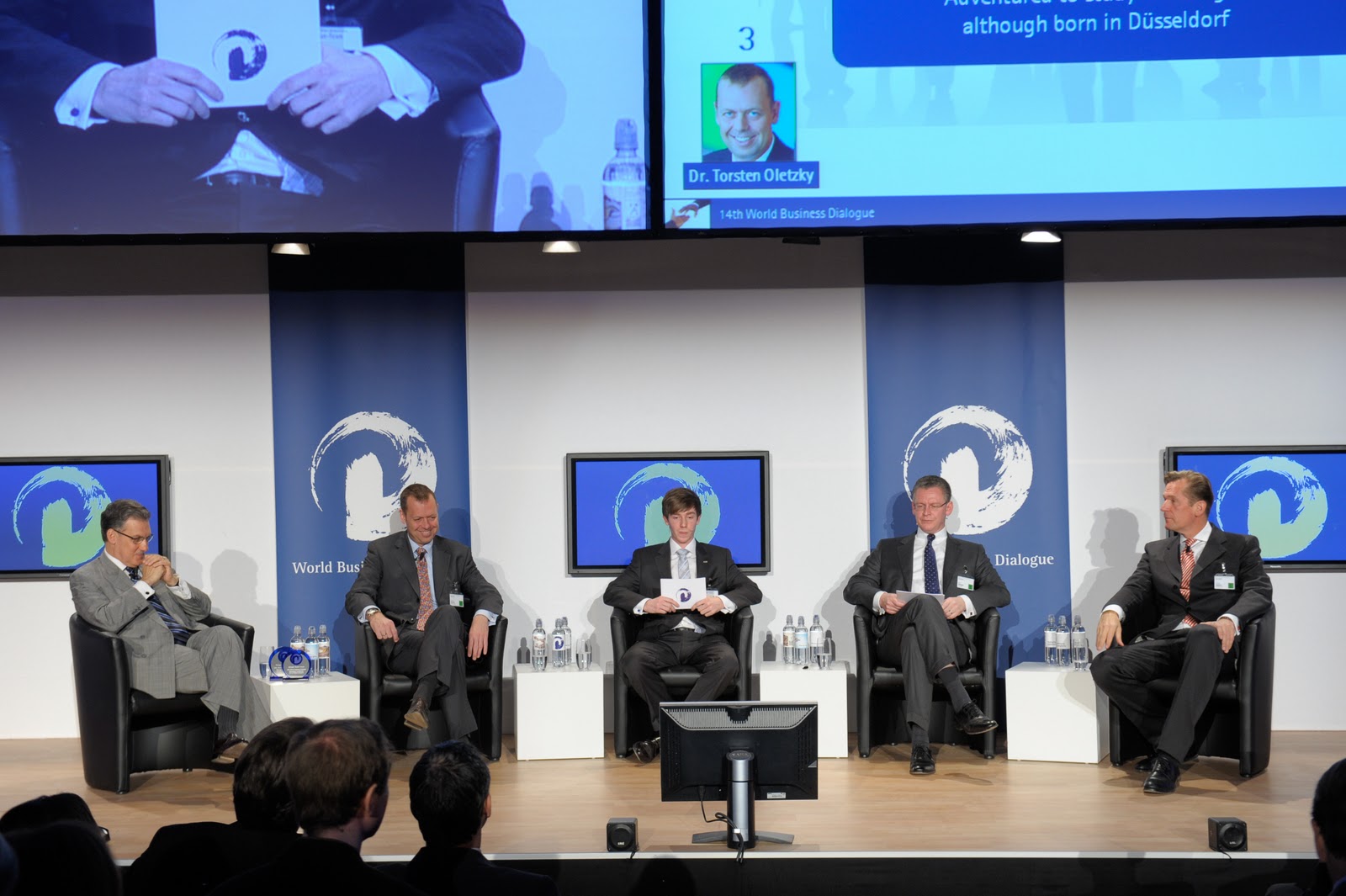
World Business Dialogue 2012

The “World Business Dialogue” is the world’s largest student-run business convention. Here, 60 top-class personalities from economy, science and politics enter a discussion about economically and socially relevant, future-oriented topics with 300 international students and just as many executives, notably from German companies. For 25 years, Cologne University is converted into a convention centre for the economic elite for two days. 

Also known under its former title “Deutscher Wirtschaftskongress”, the World Business Dialogue will once again take place on March 14-15, 2012 for the 15th time. The convention’s organisation is realized by the members of the Organisationsforum Wirtschaftskongress e.V. (OFW), where approximately 40 students are responsible for the project’s success. Furthermore, during the period leading up to the convention, the OfW e.V. is assisted by sponsors and a supporting team of 200 students who allow for the smooth running of the convention.


The World Business Dialogue’s singularity and relevance are supported by a large number of well-known speakers that have participated in past conventions; among these are Josef Ackermann, CEO of Deutsche Bank, Bill Gates, co-founder of Microsoft, and Michael Bloomberg, governing mayor of New York, who made use of the convention as a platform for discussion and exchange and appreciated the student’s commitment. The same is also true for the 300 corporate participants who were and continue to be attracted by a mixture of cross-generational dialogue, deeply founded topics, networking and recruiting.
Fees and allowances

The participation fee of the World Business Dialogue is mandatory to all students.
  • International Students: EUR100
  • German, Swiss and Austrian students: EUR50
The differentiation of prices is proportional to the risks taken from us on covering your accommodation expenses and your assured presence in case of being selected. Cooping with immense travel expenses can be an issue for student participants.The convention is able to provide a much higher amount of Dialogue Scholarships, in order to diminish the financial obstacle for participating in the Dialogue. The Dialogue Scholarship covers a student’s travelling expenses from a major airport/train station to Cologne, Düsseldorf or Frankfurt.

You are chosen by a company, which inherits the costs of travelling entirely. In addition to the financial aspect of the Dialogue Scholarship,it is offered a unique networking experience for students and companies involved: students receiving a Dialogue Scholarship are exclusively meeting the company incurring their travelling expenses at a special event hosted at the Dialogue. There are also possibilities of external Dialogue scholarships

In order to qualify for a Dialogue Scholarship it is necessary to interpret the 15th World Business Dialogue’s topic in a creative way by turning in a topic related creative work such as videos, photographs, songs, essays and any kind of creative ideas. Be creative and get your ticket to Cologne for free. The application for a Dialogue Scholarship is processed by applying for the participation in the 15th World Business Dialogue via the Online Application Tool. However, do not forget that your videos, essay etc. are subject to the following restrictions. If the restrictions should not be incorporated the application for a Dialogue Scholarship becomes invalid. The format of the submission is to be chosen by you. 

Please take care of complying with the following limitations.
-Videos/Sound recordings; any type of presentation: Max. 3 minutes
-Essays, any type of written document: Max. 300 words; stating the exact word count
  • Accepted formats: doc, pdf, docx, ppt, pps, pptx, ppsx, vhs, dvd, avi, mpeg, mov
  • All sources must be quoted
  • Plagiarism will result in disqualification
  • Only individual works are allowed
  • The work must be exclusively written for the 15th World Business Dialogue Scholarship

Eligibility
You need to be student in order to apply.

Application process

For the application to the Dialogue it is required a CV detailing your curricular and extracurricular experiences, as well as a valid student ID. Moreover, you need to answer a questionnaire with regard to your visions, ideas and motivation.
1. Why do you want to participate in the World Business Dialogue?
2. Why do you think that you should be chosen?
3. How do you think is the global consumption going to change in the course of the next 10 years?
4. What could be possible solutions regarding the change of today’s energy markets?
5. Please name the greatest advantage and disadvantage of Online Consumption concerning the future market expectations.

For questions 3, 4 and 5, it is expected from you to share your ideas in concise and organized answers. The application is to be made online through the “Application Tool”, which can be found here. The maximum amount of characters for each question is 1000. The deadline for the application is 31 December 2011.

Contacts

In case of any further questions, please write an email to application@ofw.de

Phone: +49(0)221 / 921826-0
Fax: +49(0)221 / 921826-9
eMail: info@ofw.de

Read more and apply: http://www.world-business-dialogue.com/kongressteilnahme0/

Netherlands Fellowship Programmes 2012 for Developing Countries

The Netherlands Fellowship Programmes (NFP) are designed to promote capacity building within organisations in 61 countries by providing training and education to mid-career staff. The NFP is funded by the Dutch Ministry of Foreign Affairs under the budget for development cooperation.

The overall aim of the NFP is to help alleviate qualitative and quantitative shortages of skilled manpower within a wide range of governmental, private and non-governmental organisations. This is done by offering fellowships to mid-career professionals to improve the capacity of their employing organisations.

The scholarships allow candidates to receive a postgraduate education and to earn a Dutch degree. 


NFP sub-programmes

The NFP offers you three sub-programmes to choose from:
  • Master’s degree programmes
  • Short courses
  • PhD studies
In addition, there are separate funds for Alumni Activities.

Fields of Study

The scholarship covers many fields of study including: Agriculture, Forestry & Fisheries; Architecture and Town Planning, Arts and Humanities; Business Administration and Management; Education; Engineering; Environmental Science; Fine and Applied Arts; Law; Mass Communication and Information Science; Mathematics and Computer Science; Medical and Health Science; Natural Science; Tourism and Leisure; Social and Behavioral Science; and Transport and Communications.

Target Groups

Students from 61 developing countries in Africa, Asia, Latin America and Eastern Europe.

Scholarship value/inclusions

An NFP fellowship is intended to supplement the salary that the fellowship holder should continue to receive (at least partially) during the study period. The allowance is considered to be a contribution towards the cost of living for one person, whether in the Netherlands or in another country. The fellowship can also cover the costs of tuition fees, visas, travel costs, insurance and thesis research.

Eligibility

To be eligible for an NFP fellowship you must:
  • be a mid-career professional with at least three years' relevant work experience;
  • be a national of, and working and living in one of the countries on the NFP country list valid at the time of application;
  • be nominated by your employer, who pledges to continue paying your salary and guarantees that you will be able to return to the same or an equivalent position at the end of your fellowship period;
  • have been unconditionally admitted by a Dutch institution to one of the Master’s degree programmes or Short courses on the 2012-2013 course list, or have agreed upon a PhD research proposal with the Dutch institution. This means that you must have met all the academic requirements set by the Dutch institution;
  • not already have received an NFP fellowship for a master’s degree programme or a PhD fellowship.
  • not already have received two NFP fellowships for a short course and you must not have already received a fellowship in the year preceding your application.
  • not be employed by:
    - a multinational corporation (e.g. Shell, Unilever, Microsoft);
    - a large national and/or commercial organisation;
    - a bilateral donor organisation (e.g. USAID, DFID, Danida, Sida, Dutch ministry of Foreign affairs, FinAid, AusAid, ADC, SwissAid);
    - a multilateral donor organisation, (e.g. a UN organisation, the World Bank, the IMF, Asian Development Bank, African Development Bank, IADB);
    - an international NGO (e.g. Oxfam, Plan, Care).
  • have completed and submitted an NFP PhD study, master’s degree programme or short course application, including all the required documentation, before the applicable fellowship application deadline;
  • be employed in an area to which the study will make a relevant contribution;
  • have a clear-cut, functional relationship with a relevant organisation and be in a position to introduce the newly acquired skills and knowledge into that organisation;
  • be full-time available for the entire period of the programme or course and be physically and mentally able to take part in the entire programme;
  • endorse the objective and the aim of the NFP and use your new knowledge and skills to support your employing organisation and your country. Nuffic urges you to return to your home country upon finishing the course or programme to meet the NFP aim in the most effective way.

Priorities 

Your chances of obtaining an NFP scholarship go up if you:

  • live and work  in Sub-Saharan Africa;
  • are a woman;
  • belong to a priority groups and/or are from a marginalised region as defined by the Dutch embassy in your country. You can find these priorities on the embassy's website.
Application Procedure

As stated above, to be eligible for an NFP fellowship, candidates need to be admitted to the Master’s/PhD programme for which they would like an NFP fellowship. Thus, candidates must first apply for admission directly to the Dutch institution that offers the master’s degree programme of their choice.

For 2012-2013, the deadline for fellowship applications is 7 Februrary or 1 May 2012 depending on the course (see the NFP course list for 2012-2013 to know the specific deadline for your chosen course). The deadline for academic applications is earlier, about 1-2 months earlier than the fellowship applications deadline. Therefore, candidates are strongly advised to start the application procedure for admission as early as possible.

Applications have to be submitted through Scholarships Online (SOL). Through SOL candidates can apply for fellowships online and they can check the status of an application. Other parties such as the Dutch institutions, the embassies and consulates will use SOL to assess NFP fellowship applications. SOL can be accessed through the official website starting 1 November 2011.

Visit the official website for detailed information on how to apply for this scholarship: http://www.nuffic.nl/international-students/scholarships/scholarships-administered-by-nuffic/netherlands-fellowships-programmes-nfp

International Study Programmes at the University of Amsterdam

University of Amsterdam, ranked among the top 30 universities in Europe and the top 100 worldwide, has one of the largest numbers of international Master's study programmes of any university in Europe, with over 120 taught in English and several of the courses offered being unique to the UvA. Study programmes at the UvA offer a high level of autonomy. Respect for each individual's opinions and convictions are central in the Netherlands' diverse and plural society.

For 2012-2013, the UvA has a large number of Master's and Research Master's international programmes covering a broad range of disciplines and topics. Regular Master's programmes usually take a year and lead, upon successful completion, to the award of an MSc, MA or LLM degree. Research Master's programmes take two years and prepare candidates to pursue and develop a career in academic research or associated professions.


The minimum entry requirement for Master's programmes is a Bachelor's degree in a related subject or field which is equivalent to a Dutch Bachelor's degree. In addition, students need to demonstrate a sufficient command of English in order to be able to follow lectures, tutorials and course materials. Some programmes have additional entry requirements.

Potential applicants can find more details about the specific entry requirements and application procedures via the individual programme pages listed here: Master's programmes

Amsterdam Merit Scholarship

The University provides a limited number of scholarships for excellent students in the selected Master's programmes. The total amount for the Amsterdam Merit Scholarship dedicated to the specific faculty is established annually. As the actual number of scholarships is derived from this amount, no fixed number is in place. For the academic year 2011-2012, 20% of students from outside the European Union that started in one of the Master's programme has been awarded a € 12,000 Amsterdam Merit Scholarship.  

General Criteria
In order to be considered for the AMS scholarship applicants need to meet the following general criteria:
  • hold non-EEA nationality or nationalities only
  • have above average academic results
  • not be entitled to receive a Dutch study grant or loan ("Studiefinanciering")
  • not receive a full coverage scholarship for the same period of study as the AMS scholarship
  • have submitted a complete application to one of the MSc programmes including a sufficient English test score
  • have been (or will be) admitted to one of the MSc programmes
  • be able to comply with the conditions to obtain a Dutch visa (if applicable).

Selection procedure

  1. Applicants should write an AMS motivation letter (tell us in not more than 300 words your motivation to get the scholarship).
  2. Applicants should upload the AMS digital motivation letter to their online application for the MSc programme before April 1st 2012.
  3. Before the end of May 2012 we will inform all applicants about the results by e-mail.
Please note that specific scholarship application requirements and exact dates may differ based on the faculty and the program! Refer to individual program pages specified above to obtain more information. 

Web-site: http://studeren.uva.nl/programmes/isp.cfm

STEP Beyond Travel Grants

STEP Beyond Travel grants fund up-and-coming artists and cultural workers - with a priority to individuals up to 35 years and/or in the first 10 years of their career - to travel between EU and countries bordering the EU. Since 2003, STEP  - which stands for ‘Supporting Travel for European Partnerships’ - Beyond Travel Grants have supported the movement of hundreds of people across European borders by providing between €250 and €700. In 2010, we awarded 159 individual travel grants of between €250 and €700.

Funding mobility and exchange links closely to ECF’s overall objectives and specifically to our European Neighbourhood programme, which currently works with organisations in Moldova, Ukraine and Turkey. Also high on our agenda is support for people and projects in the Arab-Mediterranean regions. We especially welcome applications for STEP Beyond Travel Grants from these regions.


STEP Beyond Travel grants support artists and cultural workers based in one of the following countries: Albania, Algeria, Armenia, Austria, Azerbaijan, Belarus, Belgium, Bosnia and Herzegovina, Bulgaria, Croatia, Cyprus, Czech Republic, Denmark, Egypt, Estonia, Finland, France, Georgia, Germany, Greece, Hungary, Iceland, Ireland, Israel, Italy, Jordan, Kosovo, Latvia, Lebanon, Libya, Liechtenstein, Lithuania, Luxembourg, Macedonia, Malta, Moldova, Montenegro, Morocco, The Netherlands, Norway, Palestinian Territories, Poland, Portugal, Romania, Russia, Serbia, Slovakia, Slovenia, Spain, Sweden, Switzerland, Syria, Tunisia, Turkey, Ukraine, and the United Kingdom.
All the activities of the ECF mobility fund are revolved around three strategic guiding principles:
  1. Empowerment of people through art and culture – support is given to different communities in Europe to encourage the exchange and empowerment of under-represented groups.
  2. Connecting sources of knowledge – sharing and connecting knowledge is vital in creating an open Europe.
  3. Linking policy and practice projects that help build an open Europe by contributing to cultural policy development locally, nationally, regionally and at a European level.

Eligibility

  • Artists or cultural workers of any contemporary artistic or cultural discipline (individual or representing a cultural or artistic independent organisation);
  • Based in Europe or in its neighborhood;
  • Maximum 35 years old.
What countries can you travel to and from?
In order to facilitate the functioning of the fund as well as to reach its aims, the larger pan-European area has been divided in two groups.
  • Group A: The 27 Member States of the European Union; The European Free Trade Association (EFTA) countries: Iceland, Liechtenstein, Norway and Switzerland.
  • Group B: In Europe: Western Balkans(Albania, Bosnia and Herzegovina, Croatia, Kosovo, Macedonia, (FYROM),Montenegro and Serbia), Belarus, Moldavia, Russia, South Caucasus (Armenia,Azerbaijan and Georgia) Turkey and Ukraine. In the South and East Mediterranean: Algeria, Egypt, Israel, Jordan, Lebanon, Libya,Morocco, Palestine Territory, Syria and Tunisia.

Types of grants

The STEP beyond offers three types of grants (350, 500 and 700 Euro) based on travel distances and average travel costs. The eligible applications are evaluated by the STEP beyond team during the pre-selection phase, after this assessment ECF decides which proposal it will support. Both awarded  and rejected applicants are notified by e-mail around one month after the application submission date.

In case of group travel:
  • a maximum of three individuals applying for the same event;
  • group applications need to be submitted by the host organisation.

Application procedure

Please follow the steps outlined below to apply for the STEP beyond travel grants:
  • Download and fill out the STEP beyond application form.
  • Fill in completely the Registration Form.
If you still have questions about the procedure, you can always contact us via e-mail: stepbeyond[@]eurocult.org

TEEME Fellowships 2012

The EACEA (The Education, Audiovisual and Culture Executive Agency, funders of the programme) will award 8 Fellowships for 2012 entry (Category A: 5; Category B: 3). In addition, all EMJDs are invited to compete for further Category A Fellowships in the Western Balkans/Turkey window.

To be admitted to the programme, candidates must present convincing outlines for research projects that are comparative and interdisciplinary in conception, that bear a clear relation to present needs and debates, and that span at least two different linguistic, religious and/or ethnic cultures within Europe, or that relate one European with one non-European culture, in the period 1400 to 1700, or in later political or cultural uses and representations of early modern literature and history. A project on Shakespeare, for instance, would be expected to look beyond formal or philological questions focused on individual plays and consider instead wider cultural issues, such as the relations between the plays and specific historical, social or intellectual dynamics in Europe and beyond, or perhaps Shakespeare’s impact on European, American, African or Asian cultures. 


Eligibility Criteria

Category A Fellowships:
These Fellowships are awarded to doctoral candidates who come from a country other than an EU member state or associated countries and who are neither residents nor have carried out their main activity (studies, work, etc.) for more than a total of 12 months over the last five years in the EU. The only exception to this rule applies to doctoral candidates who have previously received an Erasmus Mundus masters scholarship in order to follow an EMMC - such students are eligible under this Category. (Note: 'EU member state or associated countries', for the purposes of this Category, includes all EU member states, the EEA-EFTA states Norway, Liechtenstein, Iceland, plus Turkey, Switzerland, and the Western Balkan countries: Albania, Bosnia-Herzegovina, Croatia, Kosovo, Macedonia, Montenegro and Serbia).

Category B Fellowships: These Fellowships are awarded to doctoral candidates who do not fulfil the Category A criteria listed above. Candidates from the EU will have to apply under this category.

Western Balkan/Turkey window: There may be one or more additional Category A Fellowship available for candidates from Turkey or the Western Balkan countries (Albania, Bosnia-Herzegovina, Croatia, Kosovo, Macedonia, Montenegro and Serbia).

All Erasmus Mundus Fellowship holders on the TEEME programme will benefit from Fellowship contracts covering monthly allowance, holidays, parental leave, social security and pension rights. Health insurance will be provided free of charge by the consortium for all doctoral candidates on the programme.

Details of the Fellowship contracts, including the amount of the monthly allowance, will be available soon. Fellowship holders can expect a monthly net contribution towards their living expenses of c. 2000€.

Other funding options


Candidates will be eligible to apply for targeted research grants as well as partially or fully funded studentships other than Erasmus Mundus at all four partner universities. Specifically, Kent offers a number of PhD studentships each year in all participating departments to both EU and overseas candidates and supports all research students with a minimum allowance for research expenses each year; the Dahlem Research School at FU Berlin offers a range of travel and mobility grants, as well as start-up and completion scholarships to postgraduate students, both EU and international; Porto participates in a variety of national funding schemes to which researchers can apply for small research grants, short-term scholarships and travel expenses; and at Prague students will be able to apply for the grants offered by the Charles University Foundation (GAUK). In addition, students will receive support and guidance to apply for any further funding for which they may be eligible in their home countries.
 
Fees

You do not need to hold an Erasmus Mundus Fellowship to study on TEEME. Applicants who have been offered a place on the programme but were not awarded a Fellowship will have to cover the programme fees (5,000€ p.a. for EU students and 8,000€ p.a. for third-country students) through other means. Erasmus Mundus Fellowship holders do not have to pay these fees as they are included in their EU grant.

Read more about application process here: http://www.teemeurope.eu/applications/index-applications.html

Weidenfeld Scholarships and Leadership Programme, University of Oxford

The Weidenfeld Scholarships and Leadership Programme cultivates the leaders of tomorrow from transition and emerging economies by providing outstanding university graduates and young professionals with the opportunity to pursue fully funded graduate studies at the University of Oxford and access to a comprehensive programme of leadership development, long-term mentoring and networking.

Overall, the programme provides Scholars with the knowledge, skills and international networks necessary to contribute optimally to public life in their countries and regions of origin and to build lasting professional linkages across cultures and continents.


The Weidenfeld Leadership Programme includes:
  • an annual ten day long Leadership and Public Policy Seminar including conferences, moderated discussions and workshops on political philosophy and leadership development;
  • practical skills training in public speaking, conflict management and decision making;
  • an annual European Study Tour;
  • engagement in the Institute’s projects and conferences;
  • an annual Weidenfeld Debate;
  • a public policy analysis training for a selected group of Scholars long-term professional mentoring; and
  • a myriad of networking opportunities throughout the year.
The programme is managed by the Institute for Strategic Dialogue (ISD). The ISD is an independent think tank working with leaders in government, business, media and academia to develop multi-country responses to the major security and socio-economic challenges of our time and to enhance Europe’s capacity to act effectively in the global arena.

Activities include research, specialised task forces, high level policy briefings, scholarships and cross border networks that foster leadership and stability across Europe and its wider neighbourhood, actively bridging inter-communal, religious, socio-economic and political divides.

Am I eligible?

Candidates should be applying to start a new graduate course at Oxford. Please ensure you meet the requirements for entry to your course, including English language requirements.

Eligible candidates must have an undergraduate degree and be an ordinary resident of one of the following countries: Afghanistan, Albania, Algeria, Armenia, Azerbaijan, Bahrain, Belarus, Bosnia and Herzegovina, Bulgaria, Croatia, Czech Republic, Egypt, Estonia, FYR Macedonia, Georgia, Hungary, Iran, Iraq, Israel, Jordan, Kazakhstan, Kosovo, Kuwait, Kyrgyzstan, Latvia, Lebanon, Libya, Lithuania, Mongolia, Moldova, Montenegro, Morocco, Oman, Palestinian Authority, Poland, Qatar, Romania, Russian Federation, Saudi Arabia, Serbia, Slovakia, Slovenia, Syrian Arab Republic, Tajikistan, Tunisia, Turkey, Turkmenistan, Ukraine, United Arab Emirates, United States, Uzbekistan, Western Sahara, Yemen.

Applicants must be able to demonstrate that they aspire through their professional work to contribute to the public good in their country or region, or on a global basis. Applicants must be able to demonstrate a connection between their subject of study and their longer-term career objectives.

Applicants should be intending to return to their country of ordinary residence following their studies.

This scholarship may not be held in conjunction with any other awards. Students currently at Oxford are not eligible to apply unless they are already a Weidenfeld Scholar. Part-time courses are not eligible for the Weidenfeld Scholarships and Leadership Programme.

This scholarship is open to candidates studying for all degree bearing courses, with the exception of PGCert and PGDip courses.

What does it cover?

100% of university and college fees, and a grant for living costs (the rate in 2011-12 was £13,500).

Awards are made for the full duration of a student's fee liability for the agreed course. If your scholarship is offered for a course lasting more than one year, the continuation of your scholarship each year is subject to an annual renewal process based on satisfactory academic progress.

How do I apply?

Apply at the same time as you apply to Oxford by selecting Weidenfeld Scholarships and Leadership Programme in the Funding Section of the University's Graduate Application Form. Candidates should apply by Application Deadline 2 (6 January 2012 for Medical Sciences and Philosophy; 20 January 2012 for all other subjects).

In order to be considered for this scholarship, you must submit your application for graduate study by the January deadline (20 January 2012) and you must have secured a place on your chosen programme of study by the expected final decision date (16 March 2012). Applications with an outstanding admissions decision after this date, or applications which are re-evaluated against the later March deadline field, are not eligible for scholarship consideration.

You must also complete a Weidenfeld Scholarship Questionnaire and upload it together with your Graduate Application Form by the application deadline in order for your application to be complete. 

If you do not apply in full by the deadline, you will not be considered for the scholarship, even if you have selected Weidenfeld Scholarships and Leadership Programme on the Graduate Application Form.

Shortlisted candidates will be invited to attend an expenses-paid interview weekend in Oxford in early May 2012.